

























No. 02 / Sizing Decoded
Fit & Measurement
Chest.Length.Drop.
Chest, length, drop. One tape measure, three numbers, and you stop guessing.
- Measure a jersey you already like, not your body. Pit to pit, doubled, is your chest number.
- Letter sizes are not consistent between makers. The number is the only thing that travels.
- Shoulder is the one measurement you cannot fix later. Buy for the shoulder.
- Women's and youth cuts are different patterns, not scaled-down men's sizes.
Measure a jersey you already like
The most reliable size guide is the piece already hanging in your closet. Forget the letter on the label — two mediums from two different makers are not the same shirt, and a letter cannot tell you how something actually falls on you.
- Chest — armpit seam to armpit seam, straight across, then double it
- Body length — highest point of the shoulder, straight down to the bottom hem
- Hem / drop — how much wider the body is at the chest than at the hem
Zip or button nothing. Smooth the front panel out on a bed or a table so the fabric is flat but not stretched.
From one armhole seam straight across to the other. Write the number down, then double it — that doubled figure is your chest measurement.
From the highest point of the shoulder, right next to the collar, straight down to the bottom hem. This is the number that decides whether it sits at the hip or covers the pocket.
What the three numbers actually mean
Once you have your own three numbers, reading any size chart takes about ten seconds.
 Front
Front Back
Back| Number | How you read it | What it changes |
|---|---|---|
| Chest (doubled) | Fit through the body | How loose it hangs at the sides and through the arms |
| Body length | Shoulder to hem | Whether it ends at the hip or drops past the waistband |
| Drop | Difference between chest and hem width | Whether the silhouette reads as boxy or tapered |
Typical body ranges, as a starting point
These are ordinary apparel ranges, useful for orientation only. Always confirm against the size chart on the product page you are actually buying — cuts differ between styles and between men's and women's patterns.
| Size | Chest (in) | Waist (in) | Usually fits |
|---|---|---|---|
| S | 34–36 | 28–30 | A close, shirt-like fall |
| M | 38–40 | 32–34 | The default middle |
| L | 42–44 | 36–38 | Room to layer |
| XL | 46–48 | 40–42 | Loose, street-leaning |
| 2XL | 50–52 | 44–46 | Deliberately oversized |
Pick by how you want it to fall
True to your chest number. Reads like a well-fitted shirt, works tucked and under a jacket, shows the shoulder line.
One step of clearance over your chest number. The version most people actually want: enough room to move, nothing billowing.
Two steps up, and only if you plan to wear it open over something long. Sized up without a base layer just reads as borrowed.
Laundry is part of fit
Any jersey will change shape slightly in the wash, and heat is the variable you control. Cold water, inside out, hang dry. If a piece feels right on arrival and wrong after a month, the dryer is almost always the reason.
Shoulder width and armhole depth. Both are invisible on a size chart and both decide whether a jersey looks like it belongs to you. Measure shoulder seam to shoulder seam on a piece you like, then check where its armhole sits against your own — that is the difference between a jersey and a borrowed jersey.
Men's, women's, youth: three patterns, not three sizes
The most common sizing mistake is treating these as one garment at different scales. They are separate patterns. A women's cut is narrower through the shoulder, shaped at the waist, and shorter in the body. A youth cut is shorter again and proportionally wider at the hem, because it is built for someone still growing into it.
| Pattern | Shoulder | Body length | Size it by |
|---|---|---|---|
| Men's | Widest, straight down | Longest, sits past the waistband | Your own chest number |
| Women's | Narrower, shaped at the waist | Shorter, ends nearer the hip | Your own chest number, same method |
| Youth | Narrow, proportionally wide at the hem | Shortest | Chest number first, then height |
Because they are separate patterns, a women's medium and a men's medium are not interchangeable, and neither is a youth large and a men's small. If you are buying across a household, take the measurement route every time rather than converting between letters.
When sizing up is the right call
One size up over a long-sleeve base or a thin hoodie. The shoulder stays where it should and there is room to move rather than room to billow.
One size up for a young fan is the cheapest way to get two seasons out of one piece. Go larger than that and the fit stops reading as deliberate.
If the piece is going on a wall, size matters far less than the front panel. Buy the design, not the fit.
Buy for the shoulder. Everything below it can be tailored by how you wear it — the shoulder line cannot.
Pieces to measure against
Measure your own, then compare with the chart on the product page.
 Dominique Wilkins Atlanta Hawks Women's Hardwood Classics Jersey - Red$54.90
 Ja Morant Memphis Grizzlies Women's Fast Break Player Jersey - Icon Edition - Navy$50.90
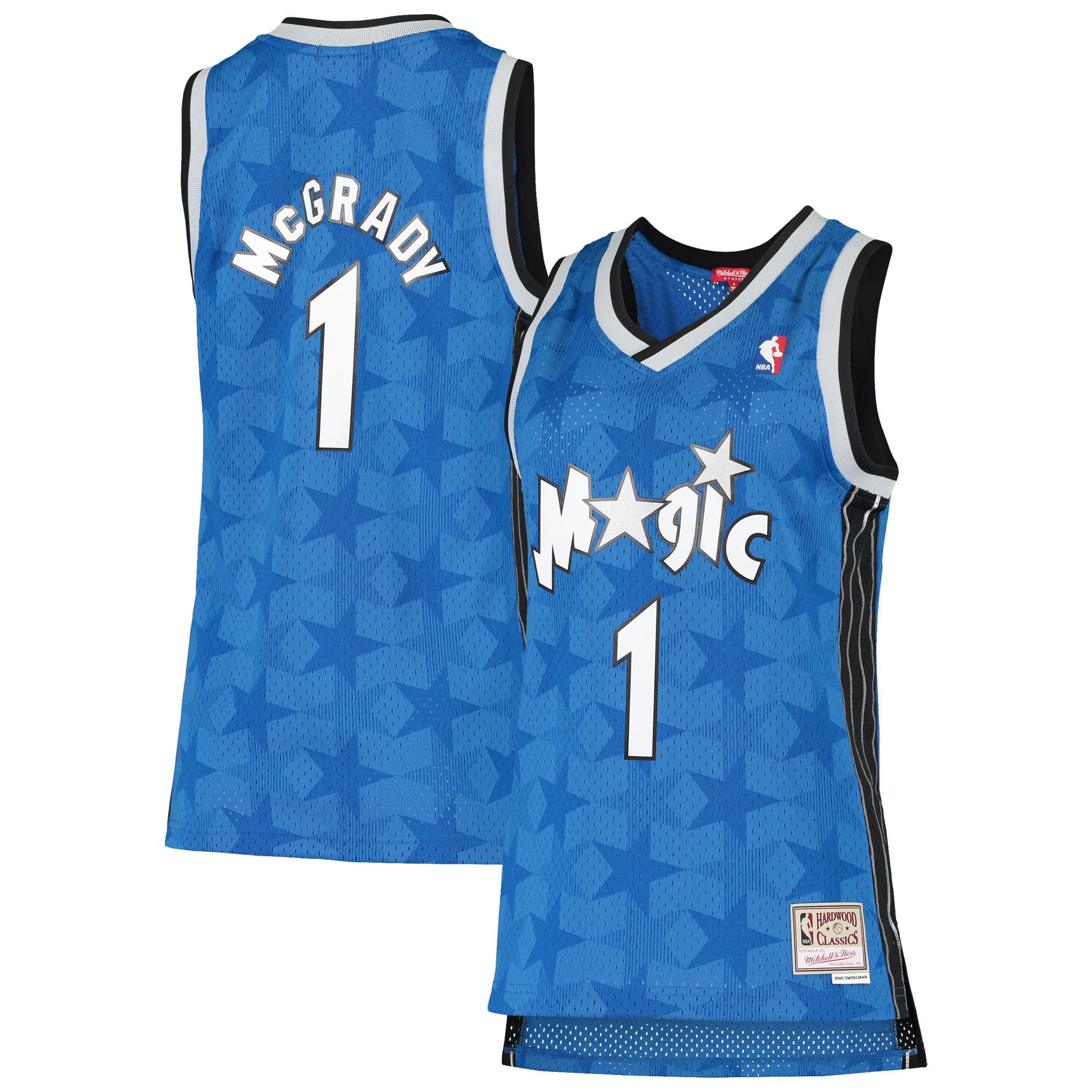 Tracy McGrady Orlando Magic Women's 2000/01 Hardwood Classics Jersey - Blue$54.90
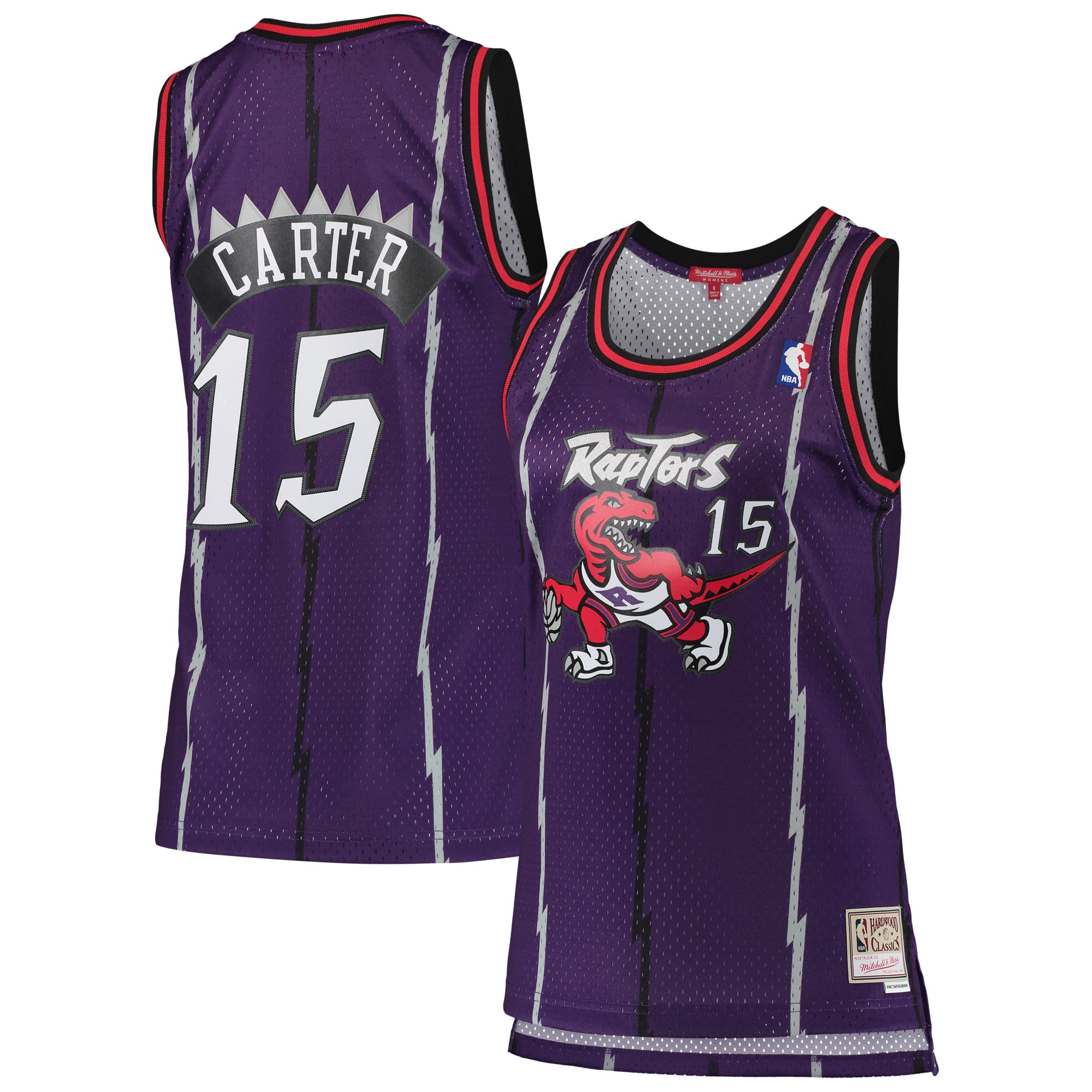 Vince Carter Toronto Raptors Women's 1998/99 Hardwood Classics Jersey - Purple$54.90
 Noah Clowney Brooklyn Nets Youth Fast Break Replica Jersey - Icon Edition - Black$48.90
 Drake Powell Brooklyn Nets Youth Fast Break Replica Jersey - Black - Icon Edition$48.90
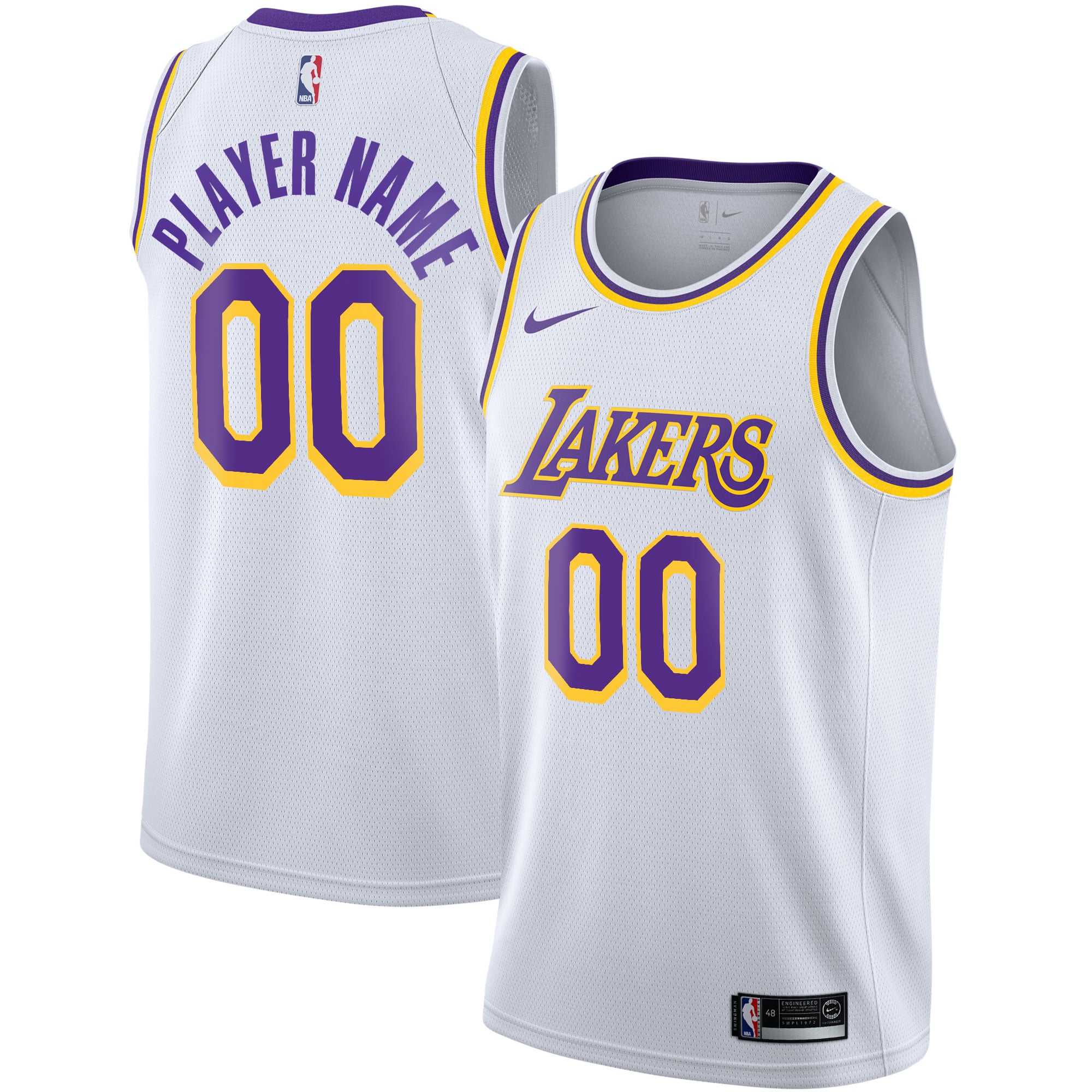 Los Angeles Lakers 2020/21 Custom Jersey - Association Edition - White$54.90
 Zeke Nnaji Denver Nuggets Fast Break Player Jersey - Association Edition - White$50.90
Do NBA jerseys run big?
They are cut for movement rather than for tailoring, so they generally sit roomier than a t-shirt of the same letter. If you want a fitted look, measure and compare instead of assuming, and consider going one size down rather than guessing.
Should I size up to layer over a hoodie?
Only if the layer underneath is thin. Over a hoodie, one size up is usually enough; two sizes up turns a jersey into a tunic at the hem.
How is the women's cut different?
It is a different pattern, not just a smaller men's size — narrower through the shoulder and waist with a shorter body length. The women's edit is 31 styles.
What if I am between two sizes?
Take the smaller one if you want it close, the larger one if you plan to wear anything under it. The chest number breaks the tie every time.
Do different colorways fit the same?
Within one style, yes. Across styles they can differ slightly — a swingman cut and a fast-break cut are not built to the same pattern, so when you move between them, read the chart again rather than assuming your usual size carries over.
I am between two sizes on the chart. Which way?
Down if you want it close and nothing is going underneath. Up if anything is. The chest number decides it; length is the secondary question and the hem can be styled.
Can an adult wear a youth size?
Sometimes, and usually as a fitted look rather than a standard one. It works when your chest number falls inside the youth range for that pattern — but check body length first, because youth cuts are short and that is the part you cannot style your way out of.
How should I store it?
On a wide hanger, not a wire one. Folded is fine too — what you want to avoid is a narrow shoulder digging into the collar for months.
Keep shopping


